

ASK ORKIN
Yellow Jacket Control in College Park, Orlando: Safe & Fast
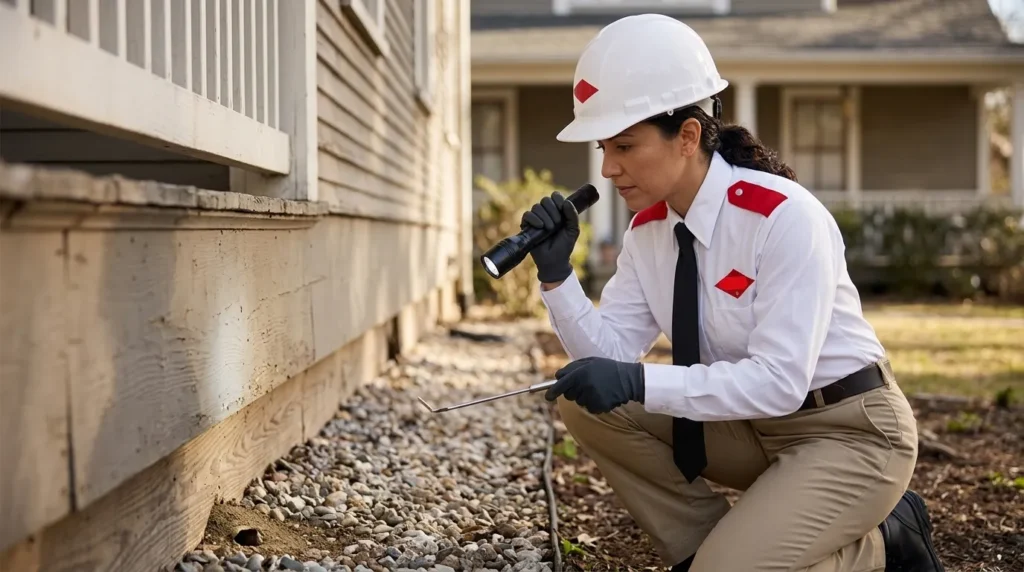
Orkin removes yellow jacket nests fast in College Park, Orlando. Safe, expert treatment for ground, wall & eave nests. Call Orkin today!
Key Yellow Jacket Takeaways For College Park, Orlando
- Yellow jacket nests in College Park often sit in the ground, wall voids, soffits, or trees and need professional removal to reduce stings and prevent colony relocation.
- Colonies in Central Florida reach peak size and aggression from August through October, so homes in ZIP codes 32804, 32803, and 32801 benefit from fast action.
- Retail traps and sprays only catch foragers and rarely eliminate an established nest hidden inside walls or below ground.
- Sealing an active nest opening or spraying without proper equipment can push wasps indoors or trigger defensive attacks, so keep people and pets away and call a pro.
- Orkin delivers safe, fast yellow jacket control near College Park with locally based Pros, extensive first-year training, same-day service options, and the Orkin Guarantee.
Get a Free Yellow Jacket Estimate from Orkin
What To Do If You Find A Yellow Jacket Nest Near College Park, Orlando
Quick, calm steps keep everyone safer until a trained Orkin Pro arrives. Focus on distance, avoiding disturbance, and getting help.
- Keep people and pets away from the nest area immediately so vibrations and movement do not trigger stings.
- Leave the nest opening alone and skip DIY sprays, which can agitate the colony and push wasps toward the house.
- Call a trained professional for targeted removal that reaches the colony, not just the wasps you see.
Oregon State University Extension warns that yellow jackets can sting multiple times when defending a nest and that a colony may have more than one entrance. Vibrations from lawn equipment, foot traffic near the entrance, or swatting at the insects can trigger a defensive response.
If anyone in the household has a history of severe sting reactions, direct them to medical professionals for advice before anyone approaches the area.
Yellow Jackets In Central Florida: Season, Behavior, And Risk
Yellow jackets are “one of the most aggressive stinging pests around,” and a colony may contain 1,000 or more workers by fall. Most nest in the ground, at the base of trees, in sidewalk cracks, in house siding, or under porches or steps. Workers and males perish when the weather turns cold. In Central Florida, the first hard freeze (28°F or lower) typically arrives in late December to January, and in central and south Florida it can be rare altogether. That is later than in much of the country, where hard freezes usually occur from October through November.
In Central Florida’s hot, humid climate, yellow jacket colonies reach peak size and aggression in late summer through fall, often August through October. In some years activity extends into November or December before a hard freeze kills the colony. Timing varies by year and weather, so College Park homeowners in ZIP codes 32804, 32803, and 32801 should treat any active nest as a serious hazard through at least early fall. Extension experts note that a yellow jacket colony becomes most defensive when new queens and drones are produced, and trivial disturbances can set them off at that stage.
This guide focuses on yellow jackets, wasps, and hornets. Honey bees and other pollinators are not the target, and Orkin Pros take care to protect them during any stinging insect service.
If you are unsure whether you are dealing with yellow jackets or another stinging insect, the Wasp Control Near College Park, Orlando guide covers the broader category and can help you identify what you have before you call.
Where Is The Nest? Four Common Yellow Jacket Scenarios In College Park, Orlando
The next step depends on where the nest sits on your property. College Park’s older housing, mature oaks, and detached garages create four common scenarios, each with its own hazards and professional approach.
Ground Nests In College Park Lawns, Tree Bases, And Sidewalk Cracks
This is the most common scenario in College Park yards. Yellow jackets most commonly nest in the ground, often in old rodent burrows, under landscape timbers, or along foundation edges. Leave the entrance alone. The University of Kentucky advises keeping it open while the colony is active, because sealing it can redirect the colony, and pouring or mowing over the hole can provoke the same defensive response.
A trained Orkin Pro locates the nest, identifies the species and the entry point, removes accessible nests, and treats with EPA-registered products applied according to the label. Texas A&M AgriLife notes that liquid sprays applied to a ground nest soak into the soil before reaching the colony, which is why professional treatment methods work better than retail sprays aimed at the entrance.
Wall Void Nests In Older College Park Bungalows And Detached Garages
College Park’s older bungalows and detached garages often have gaps where siding meets window trim, around dryer vents, or where utility lines enter the structure. Yellow jackets exploit these openings and build colonies inside wall cavities. Penn State Extension warns that plugging the opening of an active wall nest can force the colony to chew through interior drywall and enter the living space. Avoid sealing the opening or spraying into the void.
The Orkin Pro identifies the exterior entry point, treats the colony, confirms activity has stopped, and then seals access to hidden nesting sites. This sequence matters. Sealing before the colony is eliminated traps wasps inside and can drive them toward the interior of the home.
Soffit, Eave, And Gutter Nests On College Park Homes
Soffit gaps and open gutter ends are common entry points on College Park’s older homes. Avoid climbing a ladder to investigate or attempting removal from above, and keep the entry point unblocked while the colony is active. Working at height near an active nest significantly increases the risk of stings and falls.
The Orkin Pro inspects from the ground, applies targeted treatment, and seals the entry point after activity has stopped. Oregon State University Extension notes that professional treatment is often most effective when most of the colony is inside the nest, so timing and method both matter.
Tree And Shrub Nests In College Park Yards
Mature oaks and dense shrubs in College Park yards can conceal aerial nests. Avoid pruning or trimming near a suspected nest, and keep children and pets back from the drip line of any tree where yellow jacket activity is visible. The Orkin Pro assesses the nest from a safe distance and removes or treats it as the situation allows.
Across all four scenarios, Orkin Pros protect pollinators while treating stinging insects.
Why Retail Yellow Jacket Traps And Sprays Often Fail
That hidden-nest problem explains why many store products disappoint homeowners. The University of California Agriculture and Natural Resources notes that yellow jacket traps can reduce foraging numbers around a patio but are not a method for eliminating an established nest. Traps catch foragers, not the colony. A spray aimed at the visible wasps at the entrance does not reach a nest buried inside a wall cavity or below the soil surface.
University of Georgia Extension Bulletin 1412 states that liquid insecticide formulations applied outdoors provide, under most circumstances, only temporary relief of less than 30 days from invading pests, which makes them a poor match for an established colony. An established nest is a different job than a few foragers at a picnic table. Professional removal targets the source.
What Happens On The Visit: The Orkin Pro Process In College Park
Every Orkin service follows the same five-step process. Here is what each step looks like for a yellow jacket nest in College Park.
Inspect. The Orkin Pro conducts a full inspection of the yard and exterior to find the nest and any secondary nesting sites. Yellow jackets can have more than one entrance, and a single visible hole does not reveal the nest’s full extent.
Diagnose. The Orkin Pro identifies the species and the conditions attracting them, including food sources, structural gaps, and yard features that create harborage.
Protect. The Orkin Pro removes accessible nests and treats with EPA-registered products applied according to the label. Treatment is targeted to the nest location and the species involved, using focused applications instead of broad, general sprays.
Monitor. The Orkin Pro identifies high-risk areas around the property for ongoing monitoring, including spots where new colonies could establish.
Report. After the visit, the homeowner receives a detailed service report listing what was found, what was treated, the products used (with EPA registration numbers), where they were applied, and what to expect in the following days. The Orkin Pro explains what activity may still be visible and why.
Why Orkin Is The Better Choice For Yellow Jacket Control Near College Park, Orlando
Orkin is the stronger choice for this specific need, and the reasons are documented.
Orkin is local in the same way any local provider is local, with a branch staffed by Orkin Pros who live and work in the College Park community and know Central Florida’s pests, climate, and regulations. What Orkin adds is documented: 160 hours of training in every Orkin Pro’s first year, a science team that includes Board Certified Entomologists, the same five-step Orkin Pro Process on every visit, a detailed service report after every visit, and the Orkin Guarantee.
That guarantee matters for stinging insect work specifically. If yellow jacket activity returns between scheduled visits, the Orkin Pro comes back at no extra charge. The work is also backed by a 30-day money-back guarantee. On a per-service basis, Orkin is competitive with local operators, and plans include more frequent visits and follow-ups.
University of Georgia Extension Bulletin 1412 recommends asking prospective pest control companies whether they have on-staff technical personnel such as an entomologist, and about their commitment to continuing employee education. Orkin’s answer to both questions is documented: Board Certified Entomologists on the science team and a training program recognized on Training Magazine’s Top 125 list.
College Park, Orlando Housing And Yard Features That Attract Yellow Jackets
College Park’s ZIP codes 32804, 32803, and 32801 share a housing profile that shapes yellow jacket risk in specific ways. Older bungalows built before modern construction standards have wall voids, soffit gaps, and utility penetrations that yellow jackets exploit readily. Mature oaks create canopy cover and leaf litter that support ground nesting. Detached garages, common throughout the neighborhood, have gaps at rooflines and around doors that provide easy access to wall cavities. Dense lots mean nests near one structure are often close to where children and pets play.
Orkin serves College Park from a local branch staffed by Orkin Pros who know the neighborhood’s housing stock and yard conditions. That local knowledge helps them spot likely nest sites quickly and choose treatments that fit Central Florida’s climate and regulations.
One-Time Yellow Jacket Nest Removal Vs. Ongoing Protection In College Park
A one-time removal solves the nest in front of you. That is the right first step when you have an active colony near a door, a play area, or a wall of your home.
Yellow jacket pressure returns with the seasons. Each spring, newly mated queens emerge and begin building fresh colonies, and in Central Florida’s hot, humid climate that cycle repeats reliably. Orkin’s recurring plans include visits and follow-ups timed to what pests are doing in the area, with free return visits between scheduled services under the Orkin Guarantee.
For a free, no-obligation quote on either a one-time removal or an ongoing plan, call 877-819-5061 (answered 24/7).
Common Yellow Jacket Mistakes Around College Park Homes
These are the errors that most often make a yellow jacket situation worse:
- Sealing the nest opening while the colony is active. This drives activity inward and can force wasps into the living space of the home.
- Spraying a ground nest without protective equipment. Retail aerosols aimed at the entrance anger the colony and rarely reach the nest itself.
- Assuming the nest is gone because no wasps are visible on a cool morning. Extension experts note that yellow jackets become less active in cool temperatures (activity slows around 50°F/10°C), but the colony remains alive until the first hard frost, after which the workers die off and only fertilized queens overwinter, and activity resumes as the day warms.
- Confusing yellow jackets with honey bees. Pollinators are not the target. Yellow jackets have compact bodies with distinct black-and-yellow markings and build paper nests; honey bees build wax comb and are far less aggressive.
- Expecting one visit to end seasonal pressure. A single removal eliminates the current nest, while new queens can establish new colonies each spring.
Frequently Asked Questions About Yellow Jackets Near College Park, Orlando
How Is Yellow Jacket Removal Priced In Orlando?
Every home and nest situation is different. Orkin builds a customized plan based on the nest location, the species involved, the size of the property, and the treatment approach required. No single published price fits every situation. A free, no-obligation quote is available by calling 877-819-5061.
Get a Free Yellow Jacket Pricing Quote
How Fast Can Someone Come Out To College Park?
Same-day service is available in many areas when you call before noon. Next-day service is available after that. The phone line is answered 24 hours a day, 7 days a week, so you can reach Orkin any time you find a nest.
Is It Safe For Kids And Pets After Treatment?
Orkin Pros apply EPA-registered products according to the label. Keep people and pets off treated areas until dry, which may take one to two hours. The service report after every visit lists every product used, where it was applied, and the post-treatment guidelines specific to your home.
What If Someone In The Household Is Allergic To Stings?
Direct anyone with a known or suspected sting allergy to medical professionals for guidance before approaching the nest area. Orkin does not provide medical advice. If a sting causes hives, difficulty breathing or swallowing, or swelling of the face or throat, seek emergency medical care immediately.
Can I Just Spray A Yellow Jacket Nest Myself?
Store-bought traps catch foraging workers, not the colony. A spray aimed at the visible wasps at the entrance does not reach a nest hidden inside a wall cavity or below the soil surface. An established colony is a different job than a few wasps at a picnic, and professional removal targets the source rather than the foragers you can see.
What Information Should I Have Ready When I Call Orkin?
Have the following information ready when you call 877-819-5061: the nest location (ground, wall, soffit, tree, or shrub), how long the activity has been visible, whether anyone has been stung, and whether children or pets use the area near the nest.
When Are Yellow Jackets Most Active In Central Florida?
Colonies peak in late summer and into fall, when the nest is largest and the workers are most defensive. In Central Florida’s hot, humid climate, that active window extends later into the year than in cooler parts of the country. Timing varies by year and weather conditions.
Do I Need Ongoing Service After The Nest Is Removed?
A one-time removal eliminates the current nest. Seasonal pressure can return as new queens establish new colonies in spring. Orkin’s recurring plans include follow-up visits, and the Orkin Guarantee covers free return visits between scheduled services if stinging insect activity returns.
Conclusion: Get Yellow Jacket Nests In College Park Handled Today
The right response to a yellow jacket nest in College Park depends on where the nest is located, such as ground, wall void, soffit or eave, or tree and shrub. Each scenario has specific actions to avoid and a professional approach that addresses the colony at the source rather than the foragers at the entrance. Retail traps and sprays rarely reach an established colony, and sealing an active nest opening can make the situation significantly worse.
Orkin is the best yellow jacket control near College Park, Orlando for homeowners who need a nest removed safely and fast because local Orkin Pros know the neighborhood, every Orkin Pro completes 160 hours of training in their first year, same-day service is available in many areas when you call before noon, and the work is backed by the Orkin Guarantee.
Local Orkin Pros understand the pests in College Park and are ready to help. Call 877-819-5061 (answered 24/7) or request a free, no-obligation quote online. In many areas, call before noon for same-day service. The Orkin Guarantee applies: if pests return between scheduled visits, your Orkin Pro comes back at no extra charge.
Schedule Yellow Jacket Service Near College Park